
You’ve heard about the benefits of vitamin C serum, but wonder how it actually works on your skin? This powerful antioxidant, naturally present in our bodies, can reduce hyperpigmentation by 30-50% when applied directly to the skin. In this article, discover vitamin C’s mechanisms of action, effective concentrations and how to use it for best results.

How vitamin C affects the skin and its benefits
Vitamin C is a real ally for your skin. Its main action? It fights free radicals, the unstable molecules that damage our skin cells on a daily basis. By neutralizing these aggressors, it protects your skin against oxidative stress caused by pollution, UV rays and other environmental factors.
But that’s not all. Vitamin C also plays an essential role in the production of collagen, the protein that keeps your skin firm. By stimulating its natural production, it helps reduce the appearance of wrinkles and maintains skin elasticity. This is particularly interesting if you’re starting to see the first signs of aging.
Another major benefit concerns brown spots and hyperpigmentation. Scientific studies have shown that topical application of vitamin C can reduce these imperfections by 30-50%. It works by regulating the production of melanin, the pigment responsible for skin coloration.
Vitamin C also helps give your complexion a natural glow. It improves skin texture and adds luminosity. If you find your skin lacks radiance, this is an active ingredient to seriously consider.
However, to take full advantage of these benefits, you need to choose the right serum. It’s all about the right concentration and formulation for your skin type.
Concentrations and formulations: choosing the right serum
Vitamin C concentration is the first criterion to consider when choosing your serum. For real anti-aging results, opt for a concentration of at least 10%. If your skin is sensitive, start with a lower dosage and gradually increase.
L-ascorbic acid (LAA) is the most effective form of vitamin C. At concentrations of between 3% and 10%, it stimulates collagen production and helps brighten the complexion. It is therefore the preferred formulation if your skin tolerates it well.
Pay attention to the pH of your serum: ideally, it should be 3.5 or less for vitamin C to be properly absorbed by the skin. This information is usually indicated on the packaging, or can be requested from the manufacturer.
Here are a few tips to help you choose the right serum for your skin type:
- Sensitive skin: prefer gentle formulas enriched with hyaluronic acid
- Oily skin: opt for light, non-comedogenic textures
- Dull skin: choose a serum combining vitamin C and other brightening active ingredients
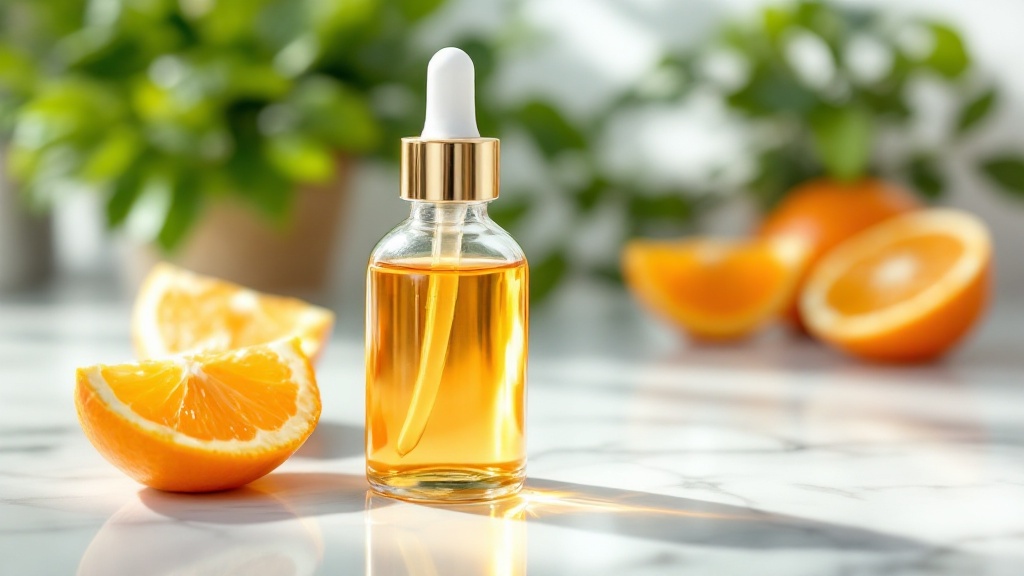
For optimum effectiveness, look for formulas that also contain vitamin E and ferulic acid. These ingredients stabilize vitamin C and reinforce its action. Opaque, hermetically sealed bottles protect the product from oxidation.
But even the best serum won’t deliver results without proper application. So how can you maximize its benefits while respecting your skin’s needs?

Tips for optimal serum application
To get the most out of your vitamin C serum, the moment of application is crucial. Use in the morning, after cleansing and toning your skin. This is when the serum will be most effective in protecting your skin throughout the day.
Here are the steps to follow for optimal application:
- Cleanse your face and apply your toner
- Apply a few drops of serum to your slightly damp skin.
- Leave to penetrate for a few moments
- Follow with your moisturizer
- Finish with your sun protection
One last important point: storage. Keep your serum in a cool, dark place to prevent oxidation. If you notice that your serum is turning yellow-orange, this is a sign that it has oxidized and that it’s time to replace it.