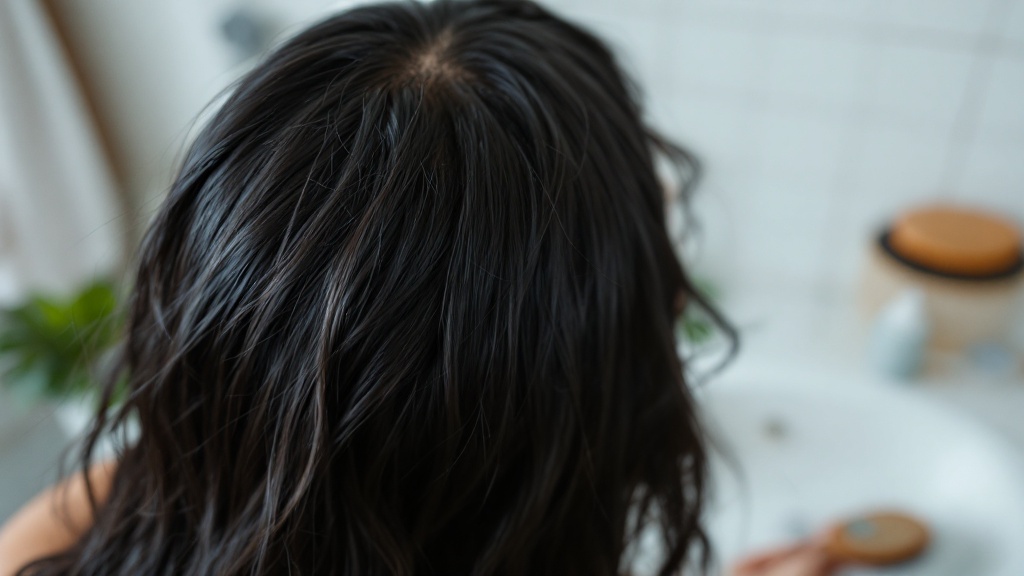

Does the dandruff that accumulates on your shoulders or in your hair bother you on a daily basis? What many people don’t know is that the scalp’s natural renewal cycle can accelerate up to 5 times when dandruff is present, rapidly aggravating the problem. In this practical guide, discover the exact causes of dandruff and effective solutions to eliminate it, from specific shampoos to natural remedies.

Understanding the causes and types of dandruff
Dandruff doesn’t have to happen. Normally, this cycle lasts between 21 and 28 days. But under the effect of stress and anxiety, the Malassezia fungus naturally present on our scalp multiplies more rapidly, causing an abnormal acceleration in cell renewal.
There are two types of dandruff, each with its own characteristics:
- Dry: these are the most common. They detach easily and look like small white or grey particles. Good news: they’re easier to treat.
- Oily dandruff: more stubborn, it’s often linked to what’s known as seborrheic dermatitis. These yellowish residues tend to stick to the scalp and hair.
Stress plays an important role in the appearance of dandruff. When we’re stressed, anxious or overworked, dandruff can rapidly worsen. This is due to a small fungus naturally present on our scalp, Malassezia. In times of stress, it multiplies more rapidly and irritates the skin.
Pollution, hormonal changes and even genetics can also contribute to the appearance of dandruff. That’s why it’s important to correctly identify your type of dandruff before starting treatment.
But once the causes have been identified, how can you really get rid of them? Fortunately, there are solutions adapted to every situation for remove dandruff and restore a healthy, soothed scalp.
Solutions for treating dandruff
Dandruff can be tackled in a number of ways, from natural solutions to medicated treatments. Specialized shampoos are often the first line of defense, with active ingredients like zinc pyrithione effectively targeting the problem. For more resistant cases, prescription alternatives or natural remedies such as tea tree oil can be considered.
Shampoos and specific products
Anti-dandruff shampoos really work. The key? Choosing the right product with the right active ingredients. Zinc pyrithione is one of the most effective. It’s easy to find in many drugstore shampoos.
For persistent dandruff, don’t panic. Your doctor can prescribe stronger treatments based on ketoconazole. These prescription shampoos are more powerful than those sold over the counter.
The ranges available in pharmacies are comprehensive and well thought-out. They include formulas enriched with soothing ingredients such as Centella Asiatica. Perfect for soothing the itching that often accompanies dandruff.
A word of advice: read labels carefully. Each product has its own speciality. Some target dry dandruff, others oily. Take your time to find the one that’s right for you.
Natural treatments
Natural solutions can be surprisingly effective against dandruff. Tea tree oil, for example, is renowned for its antifungal properties that help reduce stubborn dandruff. Cider vinegar, on the other hand, works wonders to rebalance the pH of the scalp. Simply dilute with water before application. Baking soda can also be useful: it gently exfoliates the scalp to remove excess dandruff.
Other natural options have proven effective. Aloe vera soothes itching and calms irritation. You can also try coconut oil as a pre-shampoo mask. Leave on for 15 minutes, then rinse well.
Hair hygiene and good habits
Good hair hygiene is the key to saying goodbye to dandruff. Here are the essential steps to take on a daily basis:
- Wash your hair regularly, at least twice a week. This prevents the build-up of sebum that promotes dandruff.
- Gently massage your scalp while shampooing. It’s pleasant and improves blood circulation. There’s no need to overdo it: light circular movements are all you need.
- Resist the urge to scratch! I know, it’s tempting when it itches. But scratching only further irritates the skin on your head and increases dandruff production.
Don’t forget to clean your brush or comb regularly. These accessories accumulate residues and can reintroduce dandruff into your clean hair. A simple wash with warm water and soap will do the trick.
Finally, watch your diet. Choose vitamin-rich foods and limit sugar. Your scalp will thank you!
When should you see a dermatologist?
Mild dandruff often goes away with a good shampoo. But sometimes it hides a more serious problem that requires the expert eye of a dermatologist.
Don’t wait to consult a dermatologist if your dandruff is greasy, yellowish and accompanied by redness. These signs may indicate seborrheic dermatitis, a condition requiring specific treatment. Similarly, if dandruff spreads to the forehead or face, make an appointment.
A month without improvement with conventional treatment? It’s time to see a specialist. The dermatologist will be able to identify the real cause of your dandruff and prescribe a suitable treatment, such as cortisone-based products if necessary.